 +91-95913-21052
 enquiries@prajeeva.com

 Book
Consultation
Book
Consultation


When Stress Stops Leaving,
the Body Starts Asking for Help
Burnout rarely begins with collapse. It begins quietly — with poor sleep that no longer restores, fatigue that no longer responds to rest, irritability that arrives faster than it used to, and the slow, accumulating sense that recovery is no longer happening between the stress. At Prajeeva, stress and burnout are treated as measurable clinical conditions — not as personality flaws, character weaknesses or workplace inevitabilities. We measure the physiology. We identify what is dysregulated. We rebuild recovery capacity through evidence-anchored intervention.

Burnout Is a Physiological State,
Not a Lifestyle Problem
Burnout has been recognised by the World Health Organization since 2019 as an occupational phenomenon with measurable biological consequences. It is not laziness. It is not weakness. It is not a problem with motivation, discipline or grit. It is a measurable dysregulation of the body’s stress physiology — specifically of the Hypothalamic-Pituitary-Adrenal (HPA) axis.
The HPA axis is the system that releases cortisol in response to stress. Under normal conditions, it follows a predictable daily rhythm — a sharp morning rise on waking, a gradual decline through the day, a low evening level that allows sleep. Under acute stress, cortisol rises briefly and then returns to baseline. The body recovers.
Under chronic stress, this regulation breaks down. The morning cortisol rise blunts. The evening level remains elevated. The daily curve flattens. Recovery becomes incomplete. The body starts to operate in a sustained state of dysregulated stress physiology that affects sleep, metabolism, cognition, immunity, hormones, body composition and mood.
This is the physiological state most people are describing when they say they are burned out. It is not a feeling. It is a measurable biological pattern — and once measured, it is addressable.
How We Actually Measure
Stress And Recovery
Stress and recovery are rarely measured in routine healthcare — even though they drive an enormous proportion of the symptoms that bring patients to clinicians. At Prajeeva, every patient entering the recovery pathway receives objective measurement of the systems that stress affects most directly.
What We Measure?
Why It Matters?
Cortisol Awakening Response (CAR)
Four-point salivary cortisol measurement across the day. Reveals HPA axis dysregulation — the central physiological signature of burnout — with far more precision than a single blood cortisol reading.
DHEA-S
The counter-regulatory hormone to cortisol. The cortisol:DHEA-S ratio is among the most clinically useful markers of chronic stress load and adrenal resilience.
Heart Rate Variability (HRV)
Resting and stress-state HRV measured via clinical-grade ECG. The most accessible objective measurement of autonomic nervous system balance and recovery capacity.
Sleep Architecture
Wearable-based monitoring of total sleep time, sleep onset latency, time in deep sleep, REM proportion, nighttime awakenings and HRV during sleep. Sleep is the most sensitive system to chronic stress.
hs-CRP & Inflammatory Markers
Chronic stress drives systemic low-grade inflammation, which then feeds back into cognitive symptoms, metabolic dysfunction and mood disruption.
HOMA-IR & Fasting Insulin
Chronic cortisol elevation drives insulin resistance — one of the earliest and most reversible metabolic consequences of sustained stress.
Full Thyroid Panel
Subclinical thyroid dysfunction frequently coexists with burnout and presents with overlapping symptoms (fatigue, cognitive fog, weight change, mood disturbance). Easily missed without comprehensive testing.
Sex Hormone Panel
Testosterone, oestradiol, progesterone. Chronic stress reduces sex hormone production via cortisol-driven hormonal cascade disruption. Perimenopausal women are particularly affected.
Vitamin D, B12, Ferritin, Magnesium
Nutrient sufficiency markers that frequently underlie or worsen burnout symptoms — and are directly correctable.
Validated Cognitive Battery
Objective measurement of processing speed, working memory, sustained attention and executive function — the cognitive domains most affected by burnout.
Every biomarker is interpreted within the context of the individual’s clinical picture, lifestyle factors and symptom presentation — not against a generic reference range. South Asian-specific reference ranges are applied throughout.

The Patterns We See Most Often
Burnout does not present the same way in every person. Different physiologies dysregulate differently. At Prajeeva, we identify the dominant clinical pattern in each individual and design the recovery protocol around the specific dysregulation, not around a generic stress management approach.
Dominant Pattern
What It Looks Like?
Wired-and-Tired Pattern
Elevated evening cortisol, difficulty sleeping despite exhaustion, racing thoughts at bedtime, light or fragmented sleep, mental over-stimulation. Common in founders, consultants and decision-makers running on adrenaline.
Adrenal Exhaustion Pattern
Blunted morning cortisol, profound fatigue on waking, dependence on caffeine, afternoon energy crashes, reduced stress tolerance, longer recovery from illness. Common after prolonged high-stress periods or major life events.
Inflammatory Burnout Pattern
Elevated hs-CRP, body aches, gut symptoms, cognitive fog, weight gain despite no dietary change, joint stiffness, immune dysfunction. Common with prolonged metabolic stress, poor sleep and visceral adiposity.
Hormonal Burnout Pattern
Sex hormone disruption, irregular cycles in women, low testosterone in men, libido changes, mood instability, perimenopausal symptoms intensifying. Common in 40–55 demographic.
Cognitive Burnout Pattern
Measurable decline in processing speed, working memory and sustained attention on cognitive battery. Subjective brain fog, decision fatigue, slower thinking. Common in high-cognitive-demand professionals.
Mixed Pattern
Multiple dysregulations layered together. Most common in patients who have been operating in burnout for 18+ months without intervention. Requires sequenced rather than simultaneous correction.
There is no single burnout. There are recognisable patterns of physiological dysregulation, each with a specific clinical fingerprint and each requiring a specific protocol. Generic stress management advice fails because it ignores which pattern the person actually has.
Identify Your Burnout Pattern
Sleep Is The First System
To Repair
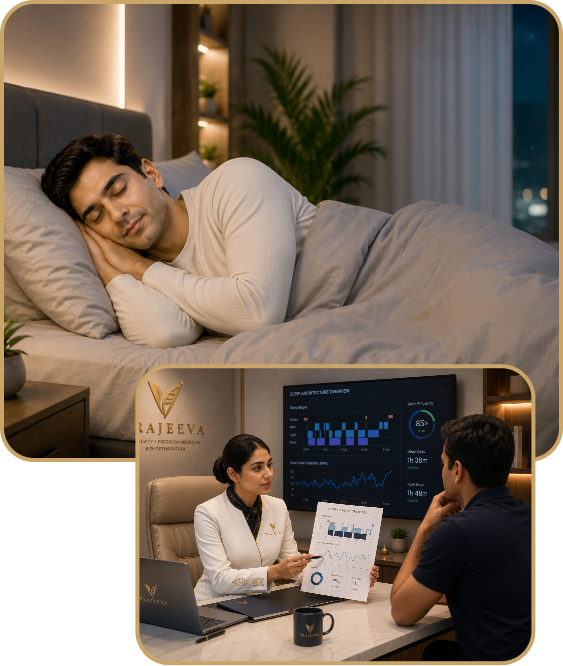
In every burnout presentation, sleep architecture is examined first. The reason is simple: sleep is both the most sensitive system to chronic stress and the most powerful biological recovery mechanism the body has. Until sleep is restored, no other recovery intervention is likely to succeed.
During deep sleep, the body’s parasympathetic nervous system dominates. Growth hormone is released. Tissue repair occurs. The brain’s glymphatic system clears metabolic waste including amyloid and tau proteins. The autonomic nervous system resets. The HPA axis prepares for the next day. None of this happens efficiently when sleep architecture is disrupted, regardless of how many hours are spent in bed.
At Prajeeva, sleep architecture is assessed through wearable integration — capturing time in deep and REM sleep, sleep onset latency, nighttime awakenings, sleep HRV and respiratory patterns. Patients with suspected obstructive sleep apnoea are referred for formal polysomnography. Interventions are targeted at the specific architectural dysfunction identified, not at generic sleep hygiene.
Where indicated, interventions may include sleep hygiene refinement, light exposure management, temperature regulation, evening nutrition adjustment (CGM-guided where appropriate), magnesium and other supplementation, cognitive behavioural therapy for insomnia (CBT-I), HRV biofeedback for autonomic regulation, and — in selected patients — short-term pharmacological support.
HRV Biofeedback -
Training the Nervous System to
Recover
The autonomic nervous system is the body’s primary stress recovery mechanism. When functioning well, it
shifts efficiently between sympathetic activation (fight-or-flight) and parasympathetic activation
(rest-and-repair). In burnout, this flexibility breaks down. The nervous system gets stuck in
sympathetic dominance — unable to fully relax even at rest, unable to fully engage even under
demand.
Heart Rate Variability (HRV) is the most accessible objective measure of this flexibility. High HRV
reflects strong vagal tone and effective stress recovery. Low HRV reflects autonomic dysregulation — the
physiological signature of chronic stress.
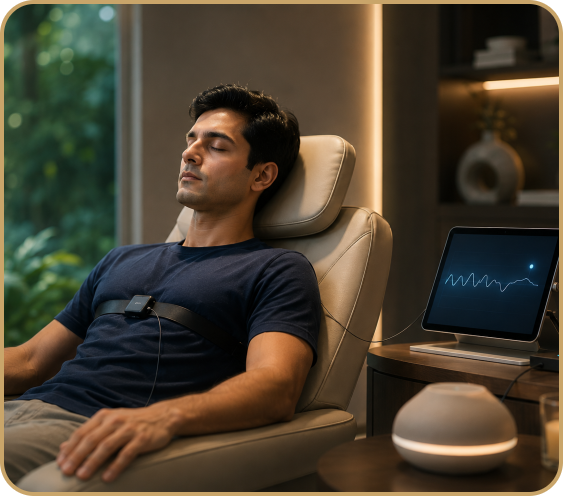
HRV biofeedback training uses real-time HRV measurement to
systematically train the autonomic nervous system, primarily through resonance breathing at
approximately 6 breaths per minute. The evidence base is substantial: strong published findings across
anxiety, insomnia, stress resilience, executive function and emotional regulation. With consistent
practice over 8–12 weeks, measurable improvements in baseline HRV are achievable.
At Prajeeva, HRV
biofeedback uses clinical-grade ECG monitoring (Polar H10) paired with the Elite HRV training platform.
Patients learn the technique in supervised in-clinic sessions, with structured home practice and data
syncing to the clinical record for physician review. HRV biofeedback is one of the cornerstone
interventions across all burnout recovery protocols at Prajeeva.
The Full Recovery Toolkit
Beyond HRV biofeedback and sleep restoration, Prajeeva’s recovery protocols draw on the full integrated clinical platform, sequenced according to the patient’s specific burnout pattern and physician-designed priorities.
Therapeutic Modalities Used in Recovery Protocols
-
Hyperbaric Oxygen Therapy (HBOT)
reduces neuroinflammation, supports mitochondrial recovery, improves cognitive function in fatigued adults.
-
IV NAD+
cellular energy restoration, supports mitochondrial function, particularly useful in profound adrenal fatigue and post-illness recovery.
-
Ozone MAH Therapy (With Mandatory G6PD Screening)
immune modulation, mitochondrial function, anti-inflammatory effects.
-
Electric Whole-Body Cryotherapy
vagal tone activation, inflammation modulation, mood support through norepinephrine release.
-
Infrared Sauna
cardiovascular conditioning, hormetic stress training, parasympathetic activation.
-
Red Light Therapy And PEMF
mitochondrial function, tissue recovery, autonomic balance.
-
Neurofeedback
EEG-based training for anxiety regulation, sleep disruption and cognitive recovery.
-
Targeted Nutritional And Supplementation Correction
addressing identified deficiencies and supporting HPA axis recovery.
-
Lifestyle And Behavioural Prescription
structured exercise programming, light exposure management, nutrition timing, boundary architecture.
Every intervention is prescribed by a physician based on the specific clinical pattern identified, sequenced appropriately, and tracked against biomarker and HRV improvement. The goal is not to layer therapies indiscriminately. The goal is to identify the dysregulation driving each patient’s burnout and target it directly.
Explore the Full Therapeutic PlatformThe Recovery Programme Structure
Stress and burnout recovery at Prajeeva is offered through a structured 12-week recovery programme, with optional extension into longer-term partnerships where the clinical picture requires it. Recovery from sustained burnout is rarely a quick process — most patients have been accumulating dysregulation for 18 to 36 months before seeking help, and meaningful biomarker improvement typically takes 8 to 16 weeks of consistent intervention.


Where Recovery Continues -
Routing To The Right Pillar
Burnout rarely affects only one system. After the 12 or 20 week recovery programme, most patients benefit from ongoing engagement with the Prajeeva clinical platform through the pillar most relevant to their dominant biological pattern.
Dominant Pattern
Recommended Ongoing Programme
Cognitive Burnout Pattern Dominant
Think Sharper 365 — ongoing cognitive longevity, brain health biomarker tracking, sustained neurofeedback and HRV biofeedback, cognitive reassessment quarterly.
Metabolic/ Inflammatory Pattern Dominant
Live Longer 365 — ongoing longevity medicine, metabolic and inflammatory biomarker tracking, biological age monitoring, integrated lifestyle medicine.
Recovery/ Performance Pattern Dominant
Perform Better Programme — sustained recovery capacity work, autonomic balance, body composition, fitness preservation.
Hormonal Pattern Dominant (Perimenopause/ Andropause)
Dedicated perimenopause / andropause clinical pathway with Live Longer integration. Ongoing hormonal panel monitoring, targeted intervention, mood and cognitive support.
Recovery is the entry point. Sustained health is the destination. Prajeeva’s integrated platform ensures that the gains made during recovery are preserved and built upon, rather than lost when the structured programme ends.
Discuss Your Long-Term PathwayWho This Programme Is For?
The Stress, Burnout & Recovery programme is designed for individuals who have moved beyond the early signs of strain and are now experiencing measurable disruption to their sleep, energy, cognition, mood or physical health.
This maybe you if…
-
You are a founder, executive or senior professional who has been operating in sustained high stress for 18+ months and now finds recovery noticeably weaker than it used to be.
-
You sleep seven or eight hours and wake up unrefreshed — and the pattern has persisted for months.
-
You have noticed cognitive changes — slower thinking, reduced focus, harder decisions — that you suspect are stress-related but want measured properly.
-
You are a woman navigating perimenopause and finding that burnout symptoms have intensified alongside hormonal change.
-
You have recovered from a major life event — health crisis, business loss, bereavement, divorce — and have not fully returned to your previous baseline.
-
You have been told by a GP that your reports are “normal” but know that something is not right.
-
You have completed therapy or psychiatric treatment for stress or depression and want the biological dimension addressed in parallel.
-
You are a high-performing individual who recognises that what you have been calling “stress” has become something more sustained and biological.

