 +91-95913-21052
 enquiries@prajeeva.com

 Book
Consultation
Book
Consultation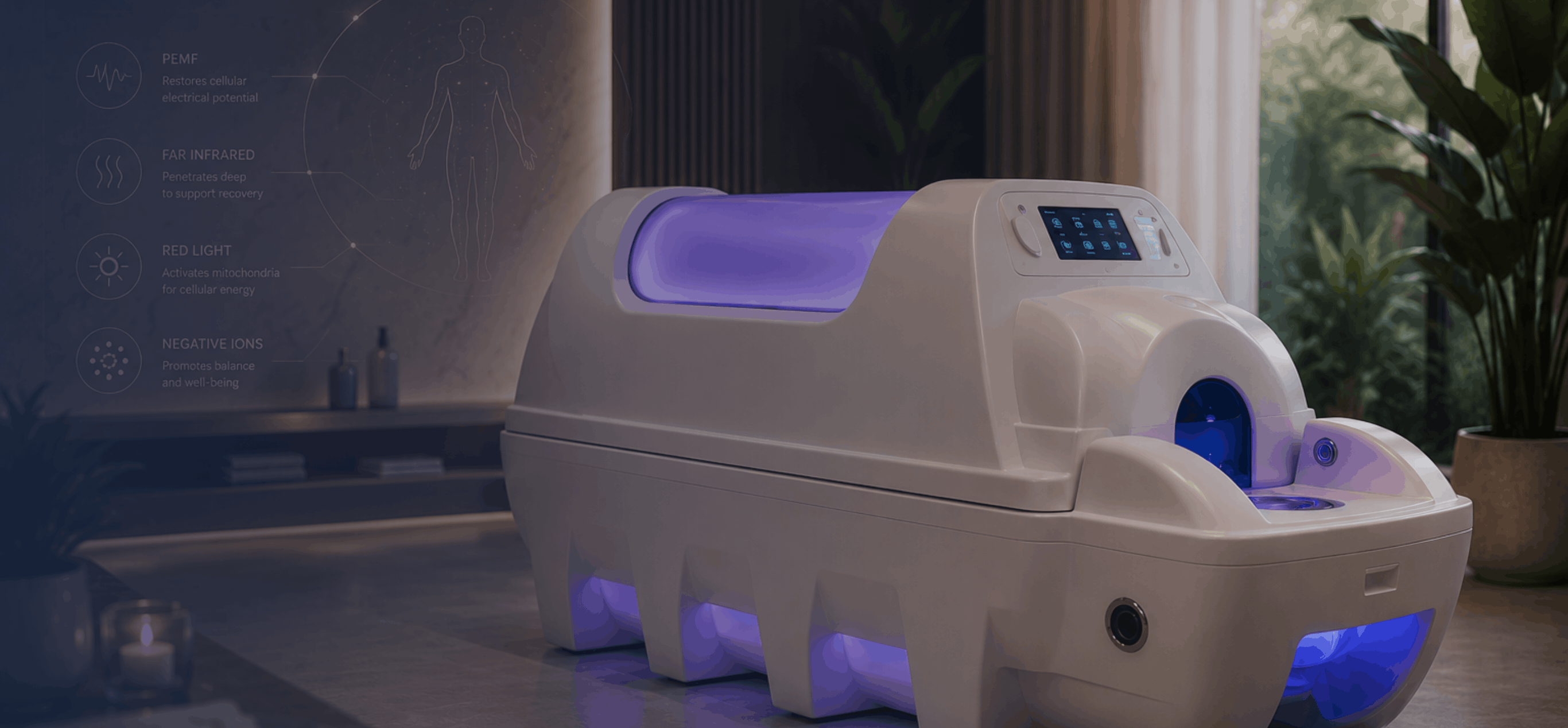


PEMF Therapy - Recharge Your Cells From the Inside Out
Your body runs on electricity. Every heartbeat, every thought, every act of healing begins with an electrical signal inside a cell. When those signals weaken — through chronic stress, injury, inflammation or time — the body falls behind on its own repair work. You feel it as fatigue no sleep fixes. Pain that lingers. Recovery that slows.

Your Body Has An Electrical Blueprint.
PEMF Reads It.
Think of every cell as a tiny battery. When fully charged, it absorbs nutrients, ejects waste, sends repair signals to its neighbours, and manufactures the proteins your tissues need to heal. When it is under-charged — through inflammation, physical trauma, or chronic oxidative stress — it struggles with all of that. The cell is still present. It just cannot perform.
PEMF restores that charge. The electromagnetic field passes through the body’s tissues and stimulates voltage-gated calcium channels in the cell membrane to open. This triggers a cascade: ion exchange normalises, transmembrane potential restores, ATP production rises, and the cell’s natural repair mechanisms switch back on.
PEMF research began in the 1950s. The US FDA first cleared a PEMF device in 1979 for healing non-union bone fractures — cases where bones refused to knit after months of conventional treatment. Since then, FDA clearance has expanded to post-surgical pain and oedema and several other specific indications, and over 900 peer-reviewed publications on PubMed document PEMF mechanisms and applications across orthopaedics, pain medicine and inflammation research.
PEMF is to your cells what a solar charger is to a depleted battery. It does not add anything the body does not already have. It restores the electrical conditions the body needs to repair itself.
Why Prajeeva Delivers PEMF
Through A Full-Body Convergence Chamber
Most PEMF devices on the market are localised pads or mats targeting one area — a painful knee, a healing fracture, a sore shoulder. For site-specific rehabilitation, they have genuine utility. But chronic inflammation, systemic dysregulation and accelerated ageing are not site-specific problems. A pad on the knee does nothing for the inflammatory load in the blood, mitochondrial dysfunction in the liver, or cortisol-driven cellular stress in the brain.
The Prajeeva Energy Pod delivers full-body PEMF in an integrated multi-modality session. Every tissue — muscle, bone, organ, nervous system — receives the electromagnetic stimulus simultaneously across a single 30–45 minute session. The pod also delivers far infrared for deep tissue heat penetration, red light at therapeutic wavelengths for mitochondrial activation, and negative ions as part of the integrated environment. The PEMF, far infrared and red light components carry independent clinical evidence; the negative ion component is part of the session environment and not claimed as a primary clinical therapy.
Features
Standard PEMF Devices
Prajeeva Energy Pod
Body Coverage
Localised pad or mat — one area at a time.
Full-body immersive chamber — all tissues simultaneously.
Modality Integration
PEMF only.
PEMF + far infrared + red light + negative ions delivered in one session.
Session duration
20–30 minutes on target area.
30–45 minute full-body convergent protocol.
Frequency selection
Variable, often single manufacturer preset.
Physician-selected frequency matched to clinical indication.
Clinical oversight
Self-administered, no screening.
Physician-screened before first use; protocol individualised.
Outcome tracking
Patient-reported only.
Biomarker tracking (inflammation, HRV, pain scores) built into the broader Prajeeva clinical record.
What the Evidence
Actually Supports
PEMF has been studied across more applications than almost any other non-invasive therapy in physical medicine. The evidence is strongest in musculoskeletal conditions and tissue repair — where PEMF has held FDA clearance for over four decades — and increasingly supported in inflammation, sleep and longevity. Prajeeva presents this honestly, without overclaiming where the data is still developing.
Application
What Evidence Supports?
Strength
Bone fracture healing & non-union
FDA-cleared for non-union fractures since 1979. Stimulates osteoblast activity and bone morphogenetic protein expression. Used as adjunctive treatment in hospital orthopaedic practice for fractures that fail to heal.
Strong (FDA-cleared)
Chronic pain (back, joint, tissue)
Meta-analyses confirm significant pain reduction. The 2025 Hackel multi-centre prospective trial in 120 patients reported 36% reduction in pain scores and 55% reduction in analgesic medication requirements.
Strong
Osteoarthritis
2024 systematic review confirms pain reduction and functional improvement across knee, hip and spine osteoarthritis. PEMF promotes chondrocyte proliferation and cartilage matrix synthesis.
Strong
Inflammation reduction
Reduces inflammatory markers including CRP, IL-1β and TNF-α. Modulates voltage-gated calcium channels and stimulates nitric oxide synthesis to enhance microcirculation.
Strong
Post-surgical recovery & wound healing
FDA-cleared adjunctive use for post-surgical pain and oedema. Stimulates angiogenesis. Landmark Heden and Pilla trial documented PEMF effect in soft-tissue and pressure-injury recovery.
Strong
Muscle recovery & athletic performance
Increases mitochondrial ATP output, clears lactic acid, reduces delayed-onset muscle soreness in multiple controlled trials.
Moderate to Strong
Sleep quality
Low-frequency PEMF promotes parasympathetic activity by modulating adenosine and endorphin signalling — pathways associated with sleep onset and slow-wave depth.
Moderate
Cognitive function & neurological health
Improved cerebral blood flow, reduced neuroinflammation, benefits in depression. Mechanistic plausibility via adenosine and endorphin pathways. Direct PEMF cognitive trials are still developing; separate transcranial magnetic stimulation has independent FDA approval for depression.
Emerging
Longevity & cellular ageing
Mechanistic plausibility through PGC-1α-driven mitochondrial biogenesis, reduced oxidative stress, and reduced chronic low-grade inflammation. Direct longevity cohort data still developing.
Suggestive
Prajeeva applies PEMF where the evidence is strongest — musculoskeletal pain, osteoarthritis, inflammation reduction, post-surgical recovery, athletic recovery — and uses honest framing where it is emerging. Where direct cohort data is still developing (cognitive function, longevity), we present the mechanism transparently rather than overclaim outcomes.
Explore the Full Evidence Base
Pain Is a Signal.
PEMF Addresses Its Source.
Most pain management in conventional medicine works downstream — anti-inflammatories block prostaglandins, analgesics interrupt the pain signal at the nerve, steroid injections suppress immune response locally. These approaches are often necessary. But they do not address why the tissue is inflamed or why the cell has not repaired.
PEMF works upstream. By restoring cellular charge and stimulating nitric oxide production, it increases microcirculation in affected tissue — delivering more oxygen and nutrients to the area that needs them while accelerating the removal of inflammatory metabolites. The result is not pain suppression. It is restoration of the conditions in which tissue actually heals.
This distinction matters most in chronic pain — the kind that has persisted for months or years despite conventional management. Chronic pain almost always involves central sensitisation: the nervous system’s alarm signal has been on high for so long it keeps firing even when the original injury has resolved. PEMF’s modulation of adenosine and endorphin pathways helps reset this pattern, reducing the nervous system’s amplification of pain rather than masking its output.
The 2025 Hackel multi-centre trial reported not just pain reduction but a 55% reduction in analgesic medication requirements. This is the clinical outcome that conventional pain management and pharmacological approaches rarely achieve simultaneously.
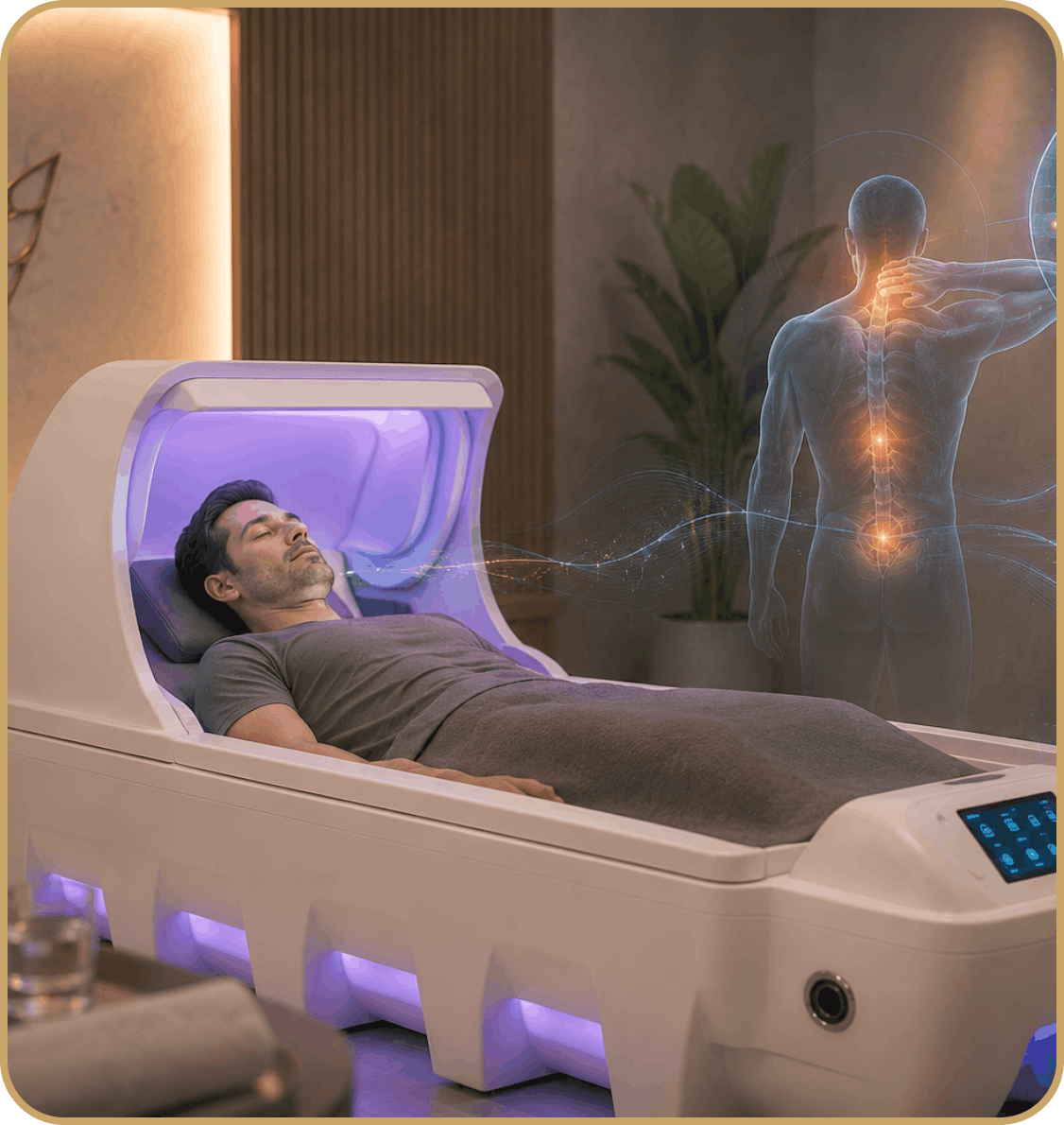
For patients with osteoarthritis, fibromyalgia, chronic low back pain, or extended post-surgical recovery, structured PEMF courses through the Prajeeva Energy Pod are integrated with biomarker monitoring and clinical reassessment, so outcomes are tracked rather than assumed.
Discuss a PEMF Pain Management Protocol
Inflammaging, Mitochondria, and Sleep -
Why PEMF Belongs In A Longevity Protocol


If you are chronically tired, inflamed, or stuck in a slow recovery loop — your mitochondria are likely part of the explanation. PEMF, red light and mitochondrial nutrition together address energy production at its source, not its symptoms.

Who Benefits Most from
PEMF at Prajeeva
PEMF is most clinically useful when matched to a specific physiological pattern. The patients who benefit most from a structured course typically share one or more of the following profiles.
Strong Clinical Fit
-
Patients With Chronic Musculoskeletal Pain
back pain, joint pain, osteoarthritis, fibromyalgia — where the evidence base is strongest.
-
Post-Surgical And Post-Injury Patients
seeking accelerated tissue repair, oedema reduction and faster return to function.
-
Athletes And Active Individuals
seeking faster recovery between training sessions and reduced delayed-onset muscle soreness.
-
Patients With Elevated Systemic Inflammatory
markers (hs-CRP, IL-6, TNF-α) seeking a non-pharmacological anti-inflammatory intervention.
-
High-Performing Professionals With Disrupted Sleep, Chronic Fatigue And Burnout
where PEMF’s effect on the autonomic nervous system and adenosine pathways is most relevant.
-
Patients In Prajeeva Longevity Programmes
seeking mitochondrial support, cellular energy optimisation and biological age management.
-
Patients With Osteoporosis Or Bone Density Concerns
PEMF’s osteoblast stimulation is well-documented and FDA-cleared for bone applications.
-
Patients With Peripheral Neuropathy
diabetic nerve damage or poor microcirculation.
Where PEMF Is Not Used
-
Implanted Electronic Devices
Absolute contraindication. Electromagnetic fields may interfere with device function. No exceptions.
-
Active, Progressing Malignancy
Reviewed individually at clinical screening. Oncologist clearance required before any full-body PEMF exposure.
-
Pregnancy
Not used as a routine intervention during pregnancy. Insufficient long-term safety data.
-
Implanted Ferromagnetic Metallic Devices
Reviewed case-by-case depending on device type, material and location relative to the pod’s field. Some implants are compatible; others are not.
-
Active Acute Infection With Fever
PEMF’s circulatory and immune stimulation is contraindicated during active febrile illness.
-
Active Haemorrhage Or Recent Significant Bleeding
Microcirculatory stimulation is not appropriate during active bleeding states.
Every patient at Prajeeva is clinically screened before their first PEMF session. The medical review is what separates a clinical PEMF service from a wellness bed available for walk-in use.
What a Session Looks Like -
And How It Integrates Into The Clinical Programme
-
Before The First Session
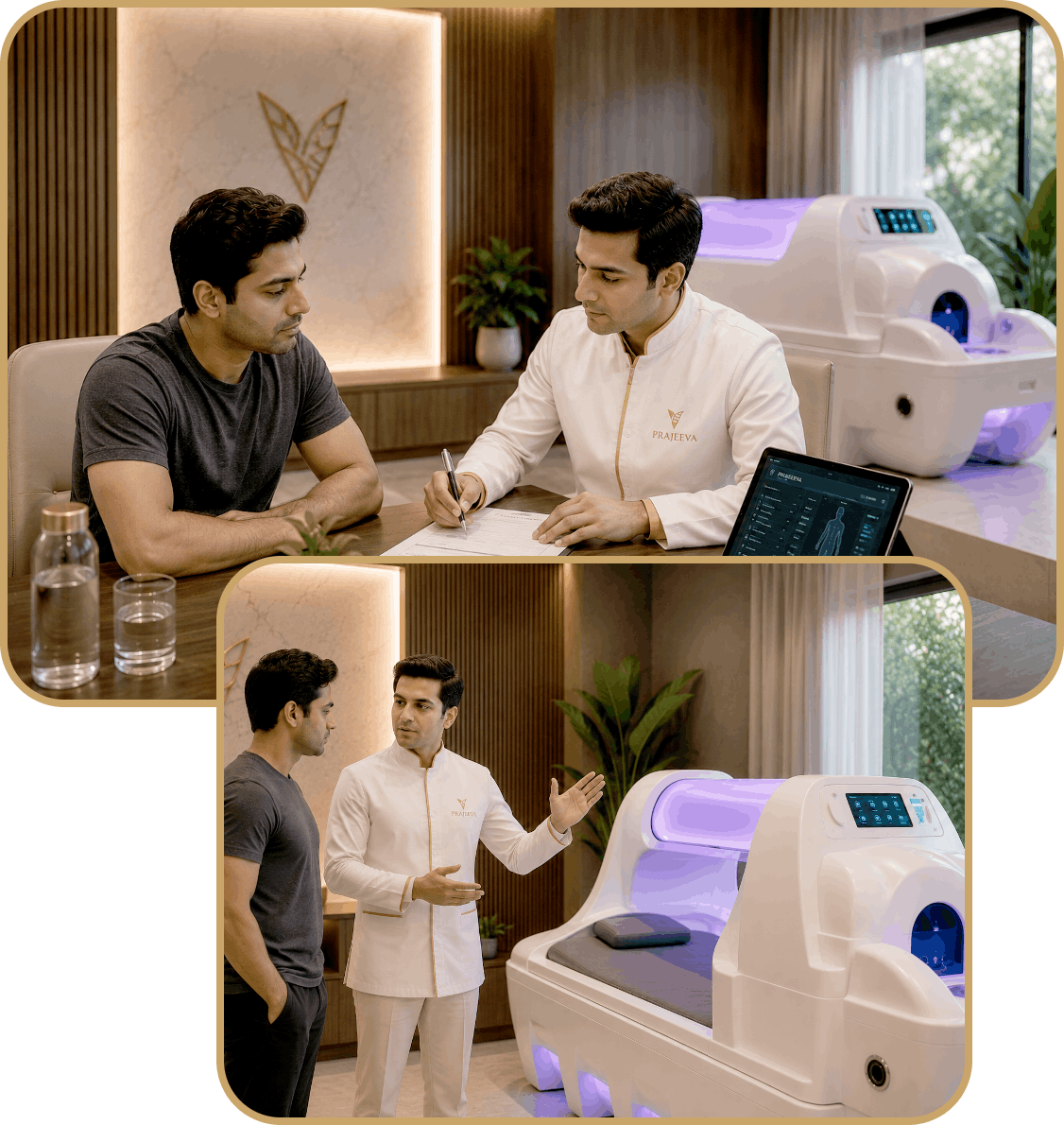
A 20-minute clinical screening confirms suitability and documents contraindications, including detailed review of any implanted devices, recent surgeries, current medications and pregnancy status. Patients new to PEMF receive a full walkthrough of what to expect during the session.
-
Preparation And The Session
Patients change into loose cotton clothing with no metal fasteners. All metallic items — jewellery, watches, belts — are removed before entering the Prajeeva Energy Pod. Hydration before the session is encouraged. The session is 30–45 minutes, fully reclined, in a controlled temperature environment. PEMF frequency and intensity are physician-set to the clinical indication — recovery, pain, sleep or longevity protocols use different frequency profiles. The far infrared, red light and negative ion functions activate simultaneously across the session. Most patients find the experience deeply relaxing; many report falling into a light sleep.
-
After The Session
No downtime is required. Hydration is recommended, as PEMF enhances lymphatic clearance. Some patients notice a temporary energy increase immediately after; others experience notably deeper sleep that night. Both responses are expected.
Integration With The Wider Prajeeva Clinical Platform
Integration Pathway
Clinical Rationale
Within Live Longer Programmes
Systemic inflammation reduction and mitochondrial support are core biological ageing mechanisms. Prajeeva Energy Pod sequenced before HBOT and red light therapy to prime cellular uptake.
Within Think Sharper programmes
Adenosine and endorphin pathway modulation supports sleep architecture and autonomic regulation — prerequisites for cognitive optimisation. Paired with HBOT for cerebral oxygenation and neurofeedback for trained attention regulation.
Within Recovery & Regenerative programmes
Accelerates post-training tissue repair, clears metabolic waste, restores cellular energy between high-load sessions. Paired with IV NAD+ and HBOT for peak recovery output.
Chronic disease management pathway
For metabolic syndrome, chronic inflammatory conditions and type 2 diabetes: PEMF’s anti-inflammatory and microvascular effects complement precision nutrition and biomarker correction.
Standalone pain and recovery
Available without a broader programme commitment. Still preceded by clinical screening, physician-set protocol and defined outcome tracking.
Electricity Built The Body.
Electricity Can Help Repair It.
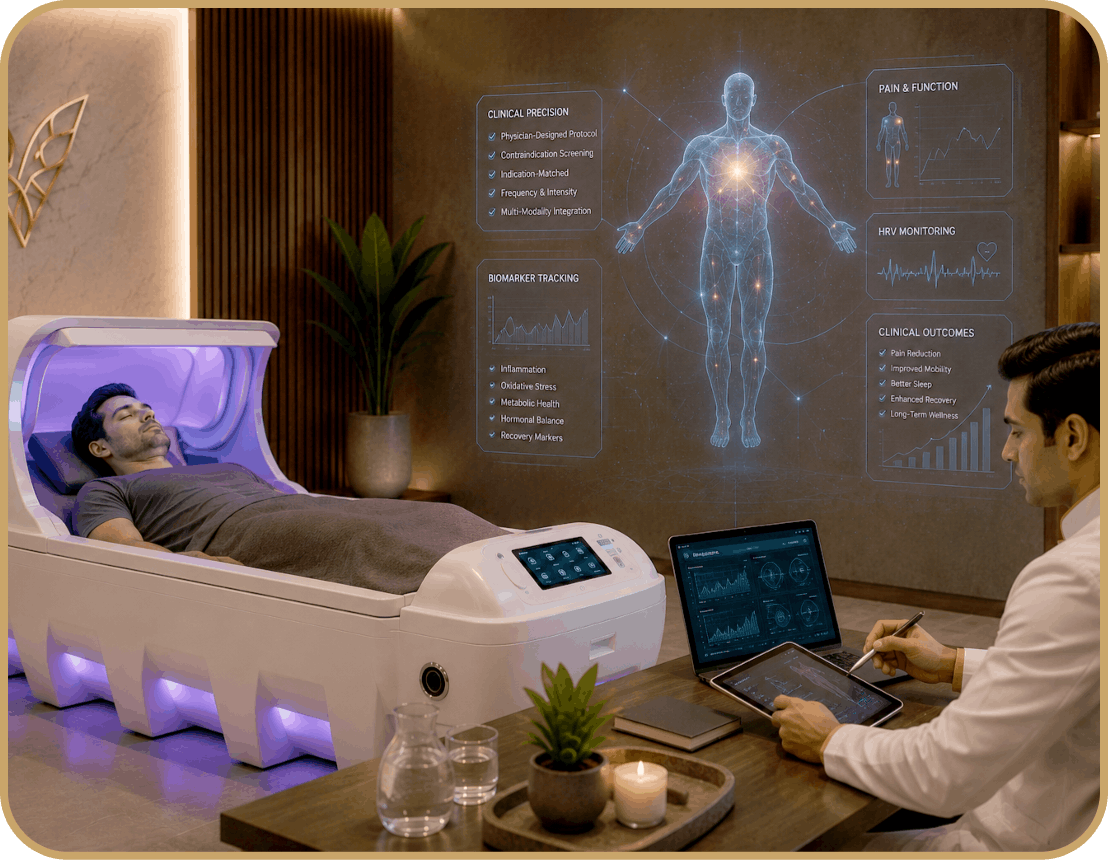
PEMF mats are now widely available in gyms, spas and wellness centres across India. The technology is spreading — and with it, the risk of using a powerful clinical tool without understanding how to use it well. Frequency, intensity, waveform, session duration, tissue indication, contraindication screening and integration with other modalities all determine whether a session is therapeutic or simply warm and pleasant. At Prajeeva, every Prajeeva Energy Pod session begins with a clinical purpose. The protocol is physician-designed, not manufacturer-preset. Contraindications are reviewed. Frequency parameters are matched to indication. Outcomes are tracked through biomarkers, pain scores, HRV monitoring and clinical reassessment at structured intervals.

