 +91-95913-21052
 enquiries@prajeeva.com

 Book
Consultation
Book
Consultation


IV Nutrition Therapy -
Feed Your Cells What Food Can Never Reach
You eat well. You supplement. You do the right things. And yet something is still not adding up — the energy is flat, recovery is slow, the immune system is reactive, the mental clarity is not quite there. Here is a truth most nutritional advice overlooks: what you swallow and what actually reaches your cells are two very different things.

The Bioavailability Problem - Why Swallowing A Supplement Is Not The Same As Using It IV?
Picture the journey of a magnesium tablet. You swallow it. It competes with calcium, zinc, and iron for
the same gut transporter proteins. A fraction crosses the gut wall. Of what enters the blood, some is
processed by the liver before it ever reaches peripheral tissues. The cell that needed magnesium — in your
muscle, your brain, your heart — may receive a modest percentage of the dose you started with. On a good
day.
For healthy people with good gut function, oral supplementation is often sufficient. But when there
is a genuine depletion — depleted NAD+ from chronic stress, exhausted glutathione from environmental toxin
load, Vitamin C gutted by illness or surgery — oral routes cannot deliver the therapeutic concentrations
needed to make a clinical difference quickly.
Intravenous delivery solves this by going around the digestive system entirely. Studies comparing oral and intravenous Vitamin C show that IV administration achieves plasma concentrations more than 50 times higher than the oral maximum — concentrations that activate entirely different biological mechanisms. The same principle applies across NAD+, glutathione, alpha lipoic acid, phosphatidylcholine, and the full spectrum of Prajeeva’s IV protocols.
The defining advantage of IV nutrition therapy is not the ingredient list. It is the delivery route. Bioavailability is the difference between a nutrient circulating at a therapeutic dose and one that does not.

The Prajeeva IV Formulary
Every Molecule, Its Mechanism, Its Evidence
Prajeeva’s IV nutrition protocols are built from molecules with defined mechanisms, peer-reviewed evidence bases, and established clinical use in functional and integrative medicine globally. All molecules below are sourced through quality-certified pharmaceutical channels. Formulations are prepared fresh for each patient.
Molecule
Primary Mechanism
Key Clinical Evidence & Grade
NAD+ (Nicotinamide AdenineDinucleotide)
Electron carrier in the mitochondrial electron transport chain. Substrate for sirtuins (SIRT1–7), PARP DNA repair enzymes, and CD38. Tissue levels decline ~50% between ages 20–50.
Elhassan et al. (2019, Cell Metabolism): NR raises muscle NAD+. Multiple human trials confirm NAD+ metabolite elevation post- infusion. Lifespan extension in animal models across multiple species. Moderate–Strong.
Glutathione (Reduced L-Form)
Master antioxidant; regenerates Vitamin C and E after oxidation; primary hepatic Phase II detoxification molecule; mitochondrial membrane protection; natural killer cell and T-lymphocyte activation.
Strong evidence for antioxidant function and oxidative stress marker reduction. Oral form is poorly absorbed — IV is the only route to therapeutic plasma concentrations. Strong for detox and antioxidant.
High-Dose Vitamin C (Ascorbic Acid)
Collagen synthesis cofactor (prolyl/lysyl hydroxylase). Antioxidant at moderate IV doses. Pro-oxidant at pharmacological doses — generates H₂O₂ selectively in tumour microenvironments. Immune modulator. G6PD testing mandatory before use.
NIH-confirmed pro-oxidant mechanism at pharmacological dose. 2024 JPEN study: improved recovery in critically ill patients. Rate-limiting step in collagen synthesis. Strong for immune/ collagen; Strong in oncology support.
Alpha Lipoic Acid (ALA) 600Mg IV
Universal antioxidant — both water- and fat-soluble. Regenerates glutathione, Vitamin C and Vitamin E. Mitochondrial cofactor (pyruvate dehydrogenase complex). Supports heavy metal clearance. Anti-inflammatory via NF-κB suppression.
Two meta-analyses of RCTs: IV ALA 600mg/day over 3 weeks produces clinically significant improvement in diabetic peripheral neuropathy (Grade B, AAFP). ScienceDirect 2025 review (48 studies, 1998–2024): injectable ALA superior to oral in bioavailability and specific clinical settings.
Phosphatidylcholine (PC)
Primary structural phospholipid of all cell membranes. Hepatoprotective — restores membrane integrity in damaged liver cells. Choline precursor for acetylcholine synthesis. Supports bile acid emulsification and fat metabolism.
Clinical trials: reduction in NAFLD symptoms, chronic hepatitis B, CIRS and ulcerative colitis. Liver regeneration evidence established in European clinical use. Particularly relevant: NAFLD affects ~38% of Indian adults. Moderate.
Myers Cocktail (Complete Formula)
Synergistic combination: B1, B2, B3, B5, B6, B12 (methylcobalamin), Vitamin C, magnesium, calcium, zinc. Cofactors for the Krebs cycle, neurotransmitter synthesis, and mitochondrial function. Foundational IV formulation in integrative medicine.
Alan Gaby MD (2002, Alternative Medicine Review): documented benefit across chronic fatigue, fibromyalgia, migraines, asthma and immune suppression across thousands of patient treatments. Moderate–Strong.
Magnesium (Sulphate/ Chloride)
Cofactor in 300+ enzymatic reactions. Required for ATP to be biologically active. NF-κB inhibitor (anti-inflammatory). Neuromuscular relaxant. Improves sleep quality via GABA modulation. Enhances insulin sensitivity.
Grade A evidence for acute migraine (IV Mg superior to standard antiemetics in multiple RCTs). 2024 Nutrients review: magnesium critical in mitigating age-related physiological decline across multiple ageing hallmarks. Strong.
B12 (Methylcobalamin /Hydroxocobalamin)
Myelin synthesis and neurological function. DNA methylation cofactor. Reduces homocysteine (cardiovascular risk marker). Energy metabolism. Methylcobalamin is the neurologically active form with superior CNS uptake over cyanocobalamin.
Strong Grade A evidence for B12 deficiency neuropathy and fatigue. Methylcobalamin specifically preferred for neurological applications. Hydroxocobalamin used in severe deficiency and pernicious anaemia.
L-Carnitine IV
Mitochondrial fatty acid shuttle — transports long-chain fatty acids into mitochondria for beta-oxidation and ATP production. Essential for cardiac energy metabolism. Reduces ammonia accumulation in hepatic conditions.
Strong evidence in chronic fatigue syndrome, cardiac disease, and renal disease-related fatigue. Multiple RCTs confirm reduction in fatigue scores and improvement in exercise tolerance. Strong.
N-Acetyl Cysteine (NAC) IV
Rate-limiting glutathione precursor — the primary IV route to raise intracellular glutathione. Gold-standard hepatoprotectant. Mucolytic. Anti-inflammatory via Nrf2 pathway activation. Synergistic with glutathione IV.
Strong Grade A evidence for hepatoprotection. Widely used clinically for liver conditions globally. Growing evidence for psychiatric and cognitive applications. NAC + glutathione IV: synergistic hepatoprotective combination. Strong.
Zinc IV
Cofactor for 300+ enzymes including superoxide dismutase (SOD). Immune T-cell and NK cell activation. Wound healing. Testosterone synthesis. Insulin receptor signalling. Antiviral via zinc ionophore mechanisms.
Strong evidence for immune function, wound healing, and genomic stability. 2024 review: zinc maintains genomic integrity and reduces oxidative stress. Widely prevalent deficiency in populations eating primarily plant-based diets. Strong.
Selenium IV
Essential cofactor for glutathione peroxidase (GPx) — the enzyme that uses glutathione to neutralise hydrogen peroxide. Required for thyroid hormone conversion (T4 → T3 via selenoenzyme deiodinases). Antiviral and immune modulation.
Strong evidence for GPx activity and thyroid function. Zinc + selenium combination supports both antioxidant enzyme systems simultaneously. Selenium deficiency correlated with higher COVID-19 severity in multiple studies. Moderate–Strong.
L-Taurine IV
Osmoregulatory amino acid with broad-spectrum roles: cardiovascular (reduces BP, improves cardiac contractility), neuroprotective (stabilises GABA receptors), anti-inflammatory, and emerging lifespan-extension evidence.
Science (2023) landmark study: taurine supplementation extends lifespan up to 12% in animal models and improves multiple markers of biological ageing in humans. Raises p53 tumour suppressor expression. Reduces cardiovascular risk markers. Well-tolerated. Moderate–Strong.
G6PD TESTING MANDATORY : Before any high-dose IV Vitamin C infusion at Prajeeva, G6PD (glucose-6-phosphate dehydrogenase) enzyme activity is tested. G6PD deficiency causes red blood cell haemolysis when exposed to the oxidative stress of pharmacological-dose Vitamin C. This test is non-negotiable. No high-dose Vitamin C protocol proceeds without confirmed normal G6PD activity.
Prajeeva’s Named IV Protocols -
Clinical Objectives, Ingredient Stacks, and Evidence
Prajeeva’s IV protocols are structured clinical programmes, not a menu. Each protocol is designed around a specific physiological objective, with ingredient selection based on mechanism and evidence. Every protocol is personalised to the patient’s biomarker picture before administration.


The Evidence Base -
What IV Nutrition Therapy Can and Cannot Do
IV nutrition therapy is a broad field with a variable evidence base across its different molecules and applications. Prajeeva presents this honestly — strong where it is strong, emerging where data is still developing. Every protocol is assigned an evidence grade before it is prescribed.
Application
Evidence Summary
Grade
Diabetic Peripheral Neuropathy (ALA IV)
IV ALA 600mg/day for 3 weeks: clinically significant symptom improvement in two meta-analyses of RCTs (Ziegler et al.). AAFP Grade B recommendation. Oral ALA not clinically significant by comparison.
Strong — Grade B
Hepatoprotection (PC + NAC + Glutathione)
Phosphatidylcholine IV: trials in NAFLD, hepatitis B, CIRS (Meeting Point Health, European clinical practice). NAC: gold standard hepatoprotection for paracetamol overdose. Synergistic combination in integrative liver medicine.
Moderate–Strong — Grade A/B
Chronic fatigue / post-viral fatigue (NAD+ + B12 + Carnitine)
Carnitine RCTs in CFS: improved fatigue scores. NAD+ human trials: elevated metabolite levels post-infusion, subjective energy improvement. B12 deficiency neuropathy and fatigue: Grade A.
Moderate–Strong — Grade A/B
Immune support (High-dose Vitamin C + Zinc + Selenium)
2025 Cureus/Alangari review: IV Vitamin C significantly enhances leukocyte function. IV Zn + Se supports T-cell and NK cell activation. 2024 JPEN: improved recovery in critically ill.
Strong — Grade A
Mitochondrial support (NAD+ + ALA + Carnitine + B-complex)
NAD+ declines 50% with age (well-established); carnitine fatty acid transport essential for ATP; ALA mitochondrial cofactor; B vitamins Krebs cycle rate-limiting. Synergistic mechanistic rationale strong.
Moderate — Grade B
Cardiovascular health (Magnesium + Taurine + Carnitine)
IV Mg: Grade A for acute migraine. Taurine: Science (2023) lifespan extension; cardiovascular risk reduction. Carnitine: strong evidence in cardiac disease and peripheral vascular.
Strong for Mg; Moderate for Taurine — Grade A/B
Longevity / biological age (NAD+ + Glutathione + ALA + PC)
Mechanistic evidence strong for each component. Sirtuin activation, PARP DNA repair, antioxidant enzyme upregulation, membrane integrity. Human biological age outcome trials ongoing.
Moderate — Grade B (mechanisms); Emerging for direct ageing outcomes
Skin health and collagen (Vitamin C + Glutathione + PC)
IV Vitamin C: rate-limiting collagen synthesis cofactor — well-established. Glutathione: skin brightening and antioxidant protection. PC: membrane integrity and fat metabolism.
Moderate–Strong — Grade A/B
NAD+ : The Molecule That Powers Everything You Are

There is one molecule your cells cannot survive without — not just to function well, but to function at all. NAD+ sits at the centre of energy production, DNA repair, immune regulation, inflammation control, and the activity of sirtuins — the longevity proteins that protect chromosomes, regulate gene expression, and coordinate cellular stress responses.
Here is the problem. NAD+ declines with age, and it does so dramatically. Tissue NAD+ levels fall approximately 50% between the ages of 20 and 50. Three simultaneous processes drive this collapse: CD38 (activated by age-related inflammation) consumes NAD+ at two to three times its youthful rate; PARP enzymes responsible for DNA repair draw heavily on NAD+ as damage accumulates; and the NAMPT salvage pathway — the body’s NAD+ recycling system — becomes less efficient after 40.
IV NAD+ replenishes this depleted pool directly, at concentrations that oral precursors (NMN, NR) cannot match — they must be converted through multiple enzymatic steps before reaching the cell as usable NAD+.
At Prajeeva, NAD+ infusions are administered as slow-drip protocols under physician supervision. The rate matters: too rapid an infusion produces chest tightness and nausea. Administered correctly at 500–1000mg over 60–90 minutes, most patients find the session deeply relaxing and report improved mental clarity within 24–48 hours.
Discuss a NAD+ Protocol Matched to Your Biomarker Profile
Why Certain IV Protocols Are
Especially Relevant Here
India’s population carries specific metabolic, nutritional, and environmental patterns that make certain IV nutrition protocols more clinically relevant than others. Understanding these patterns helps explain why Prajeeva’s physician may prioritise specific molecules for patients in this context.
Clinical Pattern
Relevant IV Molecule
Why it Matters?
NAFLD (Non-Alcoholic Fatty Liver Disease) — affects approximately 38% of Indian adults, driven by insulin resistance at BMI thresholds lower than Western populations
Phosphatidylcholine + NAC + Glutathione + ALA
PC restores hepatocyte membrane integrity. NAC and glutathione replenish the antioxidant capacity that NAFLD depletes. ALA addresses mitochondrial dysfunction in fatty liver. Together these form the most mechanistically complete IV hepatoprotection stack available.
Vitamin B12 deficiency — particularly prevalent in vegetarian and predominantly plant-based diets, where B12 is structurally absent and absorption declines with age
Methylcobalamin IV
Oral B12 correction is slow and unreliable in established deficiency. IV methylcobalamin — the neurologically active form — corrects deficiency rapidly and directly addresses neuropathy, cognitive symptoms, fatigue, and homocysteine elevation.
Metabolic syndrome and insulin resistance at lower body weight — the South Asian metabolic phenotype carries higher visceral adiposity and insulin resistance than Western populations at equivalent BMI
ALA + Magnesium + Zinc + Taurine
ALA improves insulin receptor sensitivity and mitochondrial function in metabolic tissue. Magnesium enhances insulin signalling via NF-κB inhibition. Zinc supports insulin secretion. Taurine reduces cardiovascular risk. These four address insulin resistance at the cellular level.
Diabetic peripheral neuropathy — India carries one of the world’s largest diabetic populations; peripheral neuropathy affects approximately 50% of long-term diabetic patients
ALA IV (600mg course) + Methylcobalamin + B6
ALA IV 600mg/day is the only IV therapy for neuropathy with Grade B recommendation from two RCT meta-analyses (AAFP). Methylcobalamin provides essential myelin synthesis support. B6 is a nerve conduction cofactor. This is Prajeeva’s primary neuropathy protocol.
Environmental heavy metal accumulation — urban and industrial exposure to lead, mercury, arsenic, and cadmium is measurable in a significant proportion of Indian adults, particularly in high-pollution cities
ALA + Glutathione + Vitamin C + NAC
ALA chelates multiple heavy metals including lead, mercury, and cadmium. Glutathione provides Phase II hepatic conjugation. NAC raises intracellular glutathione for cellular-level detoxification. Vitamin C provides antioxidant protection during the detox process. Combined, these four form a clinically robust heavy metal support protocol.
The Mitochondria Are Listening -
How IV Nutrition Resets Cellular Energy
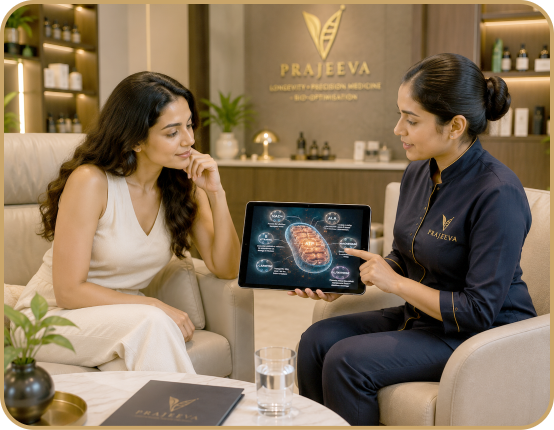
Every conversation about energy in longevity medicine arrives at the same address: the mitochondria. These structures inside each cell convert nutrients into ATP — not just the energy for physical effort, but for every immune response, every act of tissue repair, every neurotransmitter synthesis, every heartbeat. Mitochondrial efficiency declines with age, inflammation, poor sleep, and nutrient depletion. The connection between IV nutrition and mitochondrial function is direct and multi-layered. NAD+ powers the electron transport chain. ALA is a cofactor in the pyruvate dehydrogenase complex and the Krebs cycle. B vitamins (B1, B2, B3, B5) are essential cofactors at multiple steps in mitochondrial energy metabolism. L-Carnitine transports fatty acids into the mitochondria for beta-oxidation. Magnesium is required for ATP to be biologically active. Glutathione protects the mitochondrial membrane from oxidative damage.
This is why Prajeeva’s IV formulations are designed as integrated mitochondrial support systems — not single-ingredient infusions. The patient with fatigue that sleep does not fix, flat energy despite a healthy lifestyle, and slow recovery from any physical or immune challenge often has a mitochondrial infrastructure under-resourced at multiple points simultaneously. IV nutrition is one of the fastest ways to restore it.
You cannot optimise a mitochondrion that is missing its cofactors. NAD+, ALA, carnitine, magnesium and the B-complex are not optional extras. They are the operating system.
Who Benefits Most
And Where IV Therapy Is Not Used
Strong Clinical Fit
-
Patients With Documented Micronutrient Deficiencies
particularly B12, magnesium, zinc, and ALA-relevant conditions — where oral correction has been slow or inadequate.
-
Chronic Fatigue, Burnout, Or Post-Viral Fatigue Syndrome
where depleted NAD+, glutathione, and B vitamins are consistent findings and IV delivery produces the fastest symptomatic improvement.
-
Diabetic Peripheral Neuropathy
where IV ALA (600mg course) has Grade B evidence from two RCT meta-analyses.
-
NAFLD And Liver Health
where the PC + NAC + Glutathione + ALA combination addresses the dominant mechanism in India’s highest-prevalence liver condition.
-
High-Performing Individuals Seeking To Sustain Peak Performance
where scheduled IV maintenance prevents the depletion cycle rather than correcting it after.
-
Patients With Elevated Oxidative Stress Or Systemic Inflammatory Markers
tracked against the Prajeeva biomarker panel.
-
Patients In Longevity Programmes
seeking biological age optimisation alongside HBOT, PEMF, and red light therapy.
-
Post-Surgical Or Post-Illness Patients
where gut function is temporarily compromised and oral absorption is unreliable.
-
Patients With Gut Malabsorption Conditions
(IBS, IBD, SIBO, post-antibiotic dysbiosis) where oral supplementation is structurally limited.
Where IV Therapy Is Not Used at Prajeeva
-
Active Kidney Failure Or Severe Renal Impairment
high-dose Vitamin C and certain electrolytes require intact renal clearance.
-
G6PD Deficiency
high-dose IV Vitamin C is absolutely contraindicated. G6PD testing mandatory before first session.
-
Patients On Anticoagulant Therapy
reviewed case-by-case given interaction profile of certain formulations.
-
Pregnancy
IV nutrition outside medically indicated supplementation is not offered as a routine intervention.
-
Active Acute Infection With Fever
systemic response assessed clinically before scheduling.
Every patient receives a clinical screening before their first IV session. This is not administrative paperwork. It is the clinical conversation that determines what goes into your drip, why, and at what dose.
Book an IV Nutrition AssessmentThe Prajeeva IV Difference -
Clinical Context Changes Everything
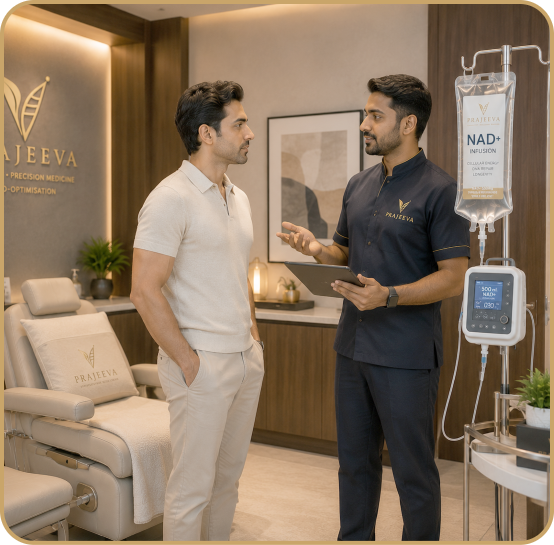
Open a wellness app in any Indian city today and you will find an IV drip menu. Hydration drips.
Glow
drips. Hangover drips. Beauty drips. Most are safe. Most are pleasant. Most are delivering a
standard
formulation to whoever books the appointment — without a clinical conversation, without a
biomarker
picture, and without knowing whether the ingredients match an actual deficiency or goal.
That is not
what IV nutrition therapy means at Prajeeva. Every patient begins with a clinical consultation
and,
where indicated, biomarker assessment. Your NAD+ precursor levels, oxidative stress markers,
glutathione
status, B12, magnesium, zinc, ALA-relevant neuropathy assessment — these inform the formulation
your
drip contains. The difference between IV nutrition therapy as a wellness service and as a clinical
intervention is not the molecule in the bag. It is the clinical reasoning behind why that molecule
is in
the bag, at that dose, for that patient.
Prajeeva’s IV protocols are also sequenced within the broader
modality architecture of the centre. NAD+ infusion is administered before infrared sauna, PEMF,
HBOT,
red light therapy, and cryotherapy — because a cell with a replenished NAD+ pool is better primed
to
absorb the mitochondrial stimulus of what follows. This is clinical sequencing, not wellness
narrative.
The body does not fail because it lacks willpower. It fails because the molecules it needs to repair, protect, and energise itself become progressively harder to source as we age, stress, and live in the modern world. IV nutrition is how Prajeeva addresses that deficit — at the source.
What an IV Nutrition Session
At Prajeeva Looks Like
-
Before The First Session
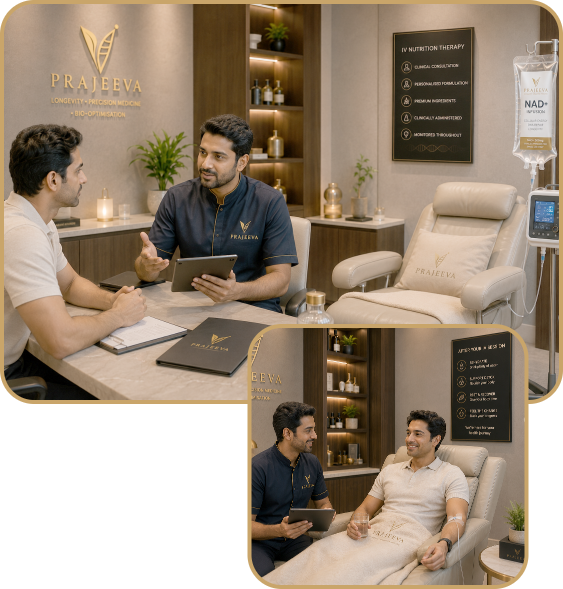
Clinical consultation (20–30 minutes): health history, current medications, symptoms, and goals reviewed. Where indicated, baseline micronutrient and biomarker panel ordered. G6PD testing confirmed before any high-dose Vitamin C protocol. Your IV formulation is designed from this picture — not from a standard menu.
-
Preparation And The Session
You settle into a private, reclined treatment chair. The IV line is placed by our clinical team. NAD+ infusions run 60–90 minutes at a carefully controlled rate — the rate matters, because too rapid an infusion produces the chest tightness and nausea that some facilities produce. Glutathione, ALA, PC, and Vitamin C protocols typically run 30–60 minutes. Many patients read, rest, or decompress. The infusion is monitored throughout by the clinical team.
-
After The Session And Course Structure
No downtime is required. Hydration is important — the detoxification and cellular activity stimulated by infusions requires fluid support. NAD+ patients often report a clarity effect within 24–48 hours. Glutathione and ALA patients frequently notice improved energy and skin quality within the first few sessions. Both responses are tracked against baseline biomarkers.
Your Cells Are Hungry.
The Question Is Whether You Are Feeding Them.
IV nutrition therapy does not replace good sleep, movement, real food, and a life with less chronic stress. What it does is fill the gap between what a healthy lifestyle can achieve and what a body under sustained depletion still needs. That gap is real. In a world of processed food, chronic stress, environmental toxin load, disrupted sleep, and accelerating work demands, most people over 35 are running some degree of cellular deficit — even those who look after themselves.
The difference at Prajeeva is that we start with your biology, not a menu. Your biomarkers tell us what is depleted and what is not. Your formulation is built around that picture, adjusted over the course of a structured protocol, and measured against outcomes that are trackable — not just how you feel walking out of the room, but what your inflammatory markers, oxidative stress panel, micronutrient levels, and neuropathy assessment show four weeks later.
IV nutrition therapy has moved beyond the wellness drip. In the hands of a physician-led clinical team with access to advanced diagnostics and a full therapeutic stack, it is a precision cellular intervention — one of the fastest and most direct ways to correct the nutritional foundation on which every other health intervention depends.
The molecules are not exotic. NAD+, glutathione, ALA, PC, carnitine, B12, magnesium, zinc, selenium — they are the operating molecules of human biology. IV delivery simply puts them where they need to be, at the concentration they need to be, without asking the digestive system to manage a problem it was not designed to solve.

